Caucasian Eyelid Surgery in Korea
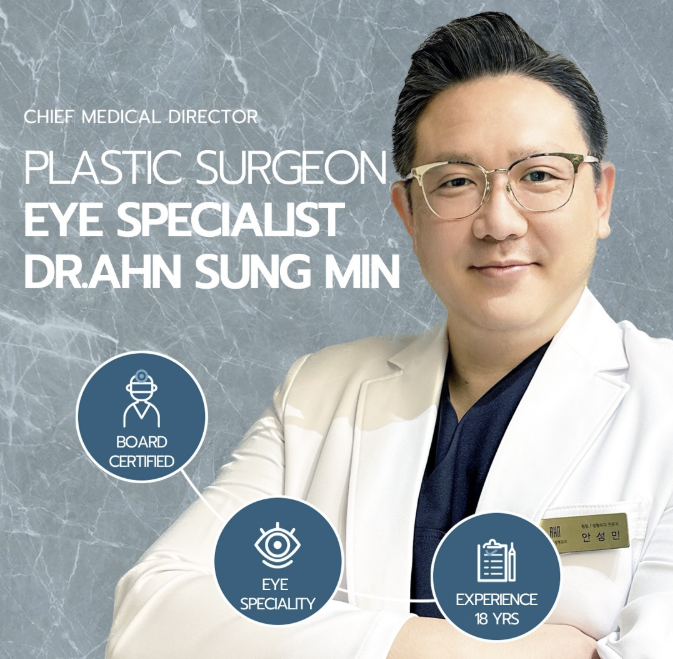
Natural Caucasian Eyelid Surgery by Dr. Ahn Sung Min
Caucasian eyelid surgery in Korea requires a customized approach that considers the patient’s natural eyelid crease, brow position, orbital structure, skin thickness, and facial proportions. At Ahn Sung Min Plastic Surgery Clinic, Dr. Ahn Sung Min creates personalized surgical plans for upper eyelid aging, under-eye bags, ptosis, asymmetry, and previous eyelid surgery. The goal is to produce refreshed, natural-looking eyes without changing the patient’s ethnic identity.
Caucasian Eyelid Surgery in Korea
Caucasian eyelid surgery is not simply the removal of excess skin or fat. Caucasian patients commonly have a naturally defined upper eyelid crease, deeper-set eyes, thinner eyelid skin, and different brow-to-eye proportions compared with many Asian patients.
Because of these anatomical differences, surgery must be carefully planned to avoid excessive skin removal, hollow upper eyelids, an unnaturally high crease, difficulty closing the eyes, or a permanently surprised appearance.
At Ahn Sung Min Plastic Surgery Clinic in Korea, every eyelid surgery is customized according to the patient’s individual anatomy, aging pattern, functional concerns, and desired result.
Natural Caucasian Eyelid Surgery by Dr. Ahn Sung Min
Dr. Ahn Sung Min focuses on eyelid surgery and evaluates both the cosmetic and functional structures surrounding the eyes.
Rather than applying the same technique to every patient, the surgical plan may consider:
- Natural eyelid crease height
- Amount of excess upper eyelid skin
- Upper eyelid fat volume
- Eyebrow position
- Eyelid-opening muscle strength
- Under-eye fat protrusion
- Tear trough hollowness
- Lower eyelid support
- Eye asymmetry
- Previous eyelid surgery or scarring
The objective is not to create an artificial or overly operated appearance. Surgery is designed to make the eyes look less tired, heavy, or aged while preserving the patient’s natural facial identity.
How Is Caucasian Eyelid Surgery Different?
Caucasian eyelids often have a visible natural crease and relatively deep-set orbital anatomy. Excessive removal of skin or fat may therefore make the eyes appear hollow, skeletal, or unnatural.
A conservative and anatomically informed approach is especially important when treating Caucasian patients.
The surgeon must balance skin removal, fat preservation, eyelid crease position, brow height, muscle function, and overall facial harmony. In some cases, the apparent upper eyelid problem may also be influenced by brow drooping rather than the eyelid alone.
A detailed examination helps determine whether eyelid surgery, ptosis correction, brow lifting, fat repositioning, or a combined treatment would provide the most appropriate result.
Upper Blepharoplasty for Caucasian Patients
Upper blepharoplasty may be recommended for patients with loose skin, hooded eyelids, heaviness, asymmetry, or an aged and tired appearance.
During surgery, excess skin may be conservatively removed while protecting the natural eyelid crease and maintaining sufficient tissue for comfortable eye closure.
Upper eyelid surgery may help improve:
- Hooded upper eyelids
- Loose or folded eyelid skin
- Heavy-looking eyes
- Uneven eyelid creases
- Difficulty applying eye makeup
- Peripheral vision affected by excess skin
- A tired or older appearance
The amount of tissue removed must be carefully controlled. Removing too much skin or fat can produce an unnatural hollow appearance and may make future revision surgery more difficult.
Lower Blepharoplasty for Caucasian Patients
Lower blepharoplasty is designed to improve under-eye bags, loose skin, wrinkles, puffiness, and the transition between the lower eyelid and cheek.
Depending on the patient’s anatomy, surgery may involve conservative fat removal, fat repositioning, skin tightening, or reinforcement of the lower eyelid.
Lower eyelid surgery may improve:
- Protruding under-eye bags
- Tear trough hollowness
- Loose lower eyelid skin
- Fine wrinkles
- Puffy or tired-looking eyes
- Uneven lower eyelid contours
- A visible lid-cheek junction
For many patients, preserving or repositioning under-eye fat produces a smoother and more youthful result than removing too much fat.
Ptosis Correction
Ptosis occurs when the upper eyelid does not open normally because the eyelid-opening muscle is weak or stretched.
Patients may compensate by raising their eyebrows or using their forehead muscles to open their eyes. This can cause forehead wrinkles, eye fatigue, asymmetry, or a constantly tired expression.
Ptosis correction may be considered when a patient has:
- One eyelid lower than the other
- Difficulty opening the eyes fully
- A sleepy or fatigued appearance
- Forehead strain
- Eyebrow elevation when opening the eyes
- Reduced upper visual field
Ptosis correction is different from simply removing excess skin. The eyelid-opening function must be carefully evaluated before choosing the surgical technique.
Revision Caucasian Eyelid Surgery
Revision eyelid surgery may be needed when a previous procedure has resulted in an unnatural crease, asymmetry, excessive hollowness, visible scarring, incomplete eye closure, or an over-corrected appearance.
Common revision concerns include:
- Excessively high eyelid crease
- Hollow upper eyelids
- Uneven eyelid shape
- Excessive skin removal
- Visible or depressed scars
- Persistent under-eye bags
- Lower eyelid retraction
- Difficulty closing the eyes
- An unnatural operated appearance
Revision surgery is generally more complex because scar tissue and altered anatomy may limit the available surgical options. A detailed in-person examination is necessary to assess the remaining skin, fat, muscle function, scar tissue, and eyelid support.
Preserving Caucasian Eye Anatomy
The purpose of Caucasian eyelid surgery is not to create an Asian-style double eyelid or dramatically change the natural eye shape.
A well-planned procedure should preserve the patient’s:
- Natural crease pattern
- Deep-set or prominent eye characteristics
- Ethnic facial identity
- Normal eyelid function
- Balanced relationship between the eyes and eyebrows
The ideal result is an appearance that looks naturally refreshed rather than surgically altered.
Personalized Consultation
During consultation, Dr. Ahn Sung Min evaluates the upper eyelids, lower eyelids, brow position, eyelid-opening strength, fat distribution, skin elasticity, facial asymmetry, and any previous surgical history.
The recommended plan may include one procedure or a combination of treatments, such as:
- Upper blepharoplasty
- Lower blepharoplasty
- Ptosis correction
- Under-eye fat repositioning
- Eyelid crease correction
- Revision eyelid surgery
- Brow or forehead lifting
The final recommendation is determined after examining the patient’s anatomy and discussing the desired level of change.
Who Is a Good Candidate?
Caucasian eyelid surgery may be suitable for adults who have:
- Hooded or heavy upper eyelids
- Excess upper eyelid skin
- Under-eye bags
- Tear trough hollowness
- Eyelid asymmetry
- Drooping caused by ptosis
- Functional vision concerns
- Previous eyelid surgery requiring correction
- Realistic expectations about surgery
Patients should be in generally good health and inform the clinic about dry eyes, thyroid eye disease, glaucoma, previous eye procedures, medications, and other relevant medical conditions.
Recovery After Eyelid Surgery
Swelling and bruising are normal during the early recovery period. Most visible swelling gradually improves during the first one to two weeks, although subtle swelling may remain longer.
Patients may experience:
- Swelling around the eyes
- Bruising
- Temporary tightness
- Mild dryness or irritation
- Temporary asymmetry caused by swelling
- Sensitivity around the incision
Final results develop gradually as swelling decreases and the incision matures. Recovery time varies depending on the surgical procedure, the patient’s healing response, and whether multiple treatments were performed together.
Eyelid Surgery in Korea for International Patients
Ahn Sung Min Plastic Surgery Clinic welcomes international patients seeking specialized eyelid surgery in Korea.
Before traveling, patients may provide clear photographs, their age, previous surgical history, medical conditions, and treatment goals for an initial assessment.
However, online recommendations are preliminary. The final surgical plan and quotation can only be confirmed after an in-person examination of the eyelids, brows, muscles, skin, and underlying structures.
Why Choose Ahn Sung Min Plastic Surgery Clinic?
Patients choose Ahn Sung Min Plastic Surgery Clinic for its concentrated focus on eyelid procedures and personalized surgical planning.
The clinic emphasizes:
- Customized eyelid surgery
- Conservative tissue removal
- Natural-looking results
- Preservation of ethnic characteristics
- Functional and cosmetic evaluation
- Careful management of revision cases
- Individualized care for international patients
The aim is to achieve balanced, long-lasting improvement while avoiding an exaggerated or standardized appearance.
Frequently Asked Questions
Is Caucasian eyelid surgery different from Asian eyelid surgery?
Yes. Caucasian and Asian eyelids can differ in crease anatomy, orbital depth, skin thickness, fat distribution, and eyebrow position. Caucasian eyelid surgery must preserve the patient’s natural crease and ethnic characteristics while treating aging or functional concerns.
Will Caucasian eyelid surgery change my ethnicity?
No. The objective is to improve heaviness, sagging, under-eye bags, asymmetry, or eyelid function while preserving the patient’s natural Caucasian eye shape and facial identity.
Can upper eyelid surgery make my eyes look hollow?
Excessive removal of upper eyelid fat or skin can create a hollow appearance. This is why conservative tissue preservation and precise surgical planning are important, particularly for patients with naturally deep-set eyes.
Can eyelid surgery correct hooded eyes?
Upper blepharoplasty can improve hooding caused by excess eyelid skin. However, hooding may also be related to a low eyebrow position, so both the eyelids and brows should be evaluated before surgery.
Do I need upper blepharoplasty or a brow lift?
This depends on whether the heaviness is primarily caused by excess eyelid skin, eyebrow drooping, or both. Dr. Ahn Sung Min evaluates the brow-to-eye relationship before recommending the appropriate treatment.
Can under-eye bags be treated without removing all the fat?
Yes. In many cases, under-eye fat can be repositioned rather than excessively removed. Fat repositioning may create a smoother transition between the lower eyelid and cheek while reducing the risk of a hollow appearance.
What is the difference between blepharoplasty and ptosis correction?
Blepharoplasty primarily treats excess skin and fat. Ptosis correction improves the function of the muscle responsible for lifting the upper eyelid. Some patients may require both procedures.
Can uneven eyelids be corrected?
Eyelid asymmetry can often be improved, but perfect symmetry cannot be guaranteed because natural differences may exist in the eyelid muscles, eyebrows, eye sockets, and facial bones.
Can previous Caucasian eyelid surgery be revised?
Revision may be possible depending on the remaining tissue, scar formation, eyelid function, and degree of correction required. Revision surgery is more complex and requires a detailed examination.
How long does swelling last?
Most visible swelling and bruising improve within approximately one to two weeks. Minor swelling can remain for several weeks or months, particularly after revision or combined eyelid procedures.
How long should I stay in Korea?
The recommended stay depends on the procedure and postoperative schedule. International patients should allow enough time for early follow-up care and suture removal when required.
Is an online consultation available?
International patients may submit clear photographs and information about their concerns, medical history, and previous surgeries for an initial assessment. The final treatment plan is confirmed during an in-person consultation.
How can I prepare for an online consultation?
Patients should provide clear front-facing, side-view, and upward-gaze photographs without makeup or filters. They should also include their age, treatment goals, medical history, current medications, and details of any previous eyelid or eye surgery.
Are the results permanent?
Surgically removed skin and repositioned tissue do not return to their original condition. However, the natural aging process continues, and the eyelids and brows may gradually change over time.
How do I know which procedure is right for me?
The most appropriate procedure can only be determined after evaluating the eyelid skin, crease, fat volume, muscle strength, eyebrow position, lower eyelid support, facial proportions, and previous surgical history.
Double Eyelid Surgery before & after
Unretouched photos of real patients, operated by board-certified plastic surgeon Dr. Ahn Sung Min in Seoul. See the full gallery of 7 cases.
 Incisional double eyelid surgery
 Incisional double eyelid surgery
 Incisional double eyelid surgery
 Incisional double eyelid surgery

About the surgeon
Korean board-certified plastic surgeon trained at Yonsei University College of Medicine, and a full member of the Korean Society of Plastic and Reconstructive Surgeons, the Korean Society for Aesthetic Plastic Surgery and the Korean Society for Microsurgery. Representative Director of Ahn Sung Min Plastic Surgery, an eye-only clinic in Seoul.
- 4,000+ eyelid procedures
- 18 yrs eye surgery only
- 2 a day maximum operations
- 1 surgeon from consultation to follow-up
Last updated October 2026. This page gives general information about Caucasian Eyelid Surgery in Korea and is not a substitute for an in-person consultation. Individual results vary. Contact the clinic