Ptosis Correction in Korea |
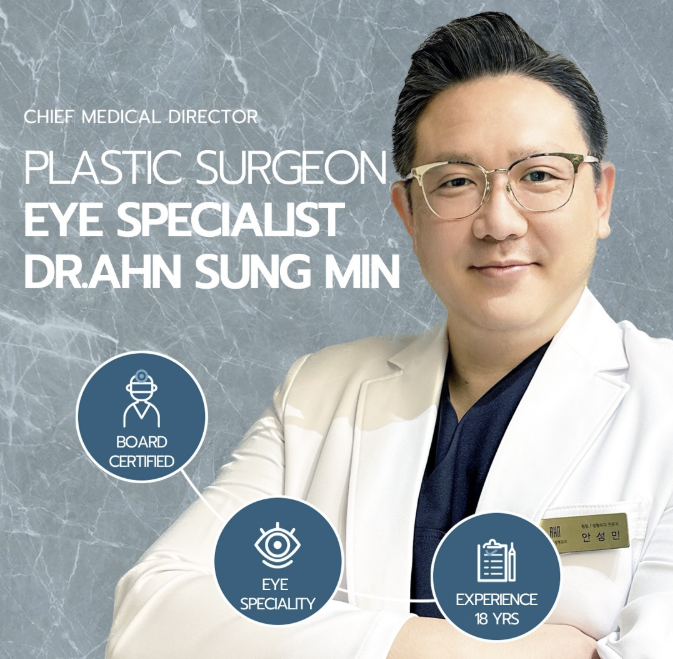
Customized Eyelid Correction by Dr. Ahn Sung Min
Ptosis correction in Korea improves droopy eyelids caused by weak eyelid-opening muscles, helping patients achieve brighter, more alert, and natural-looking eyes. At Ahn Sung Min Plastic Surgery Clinic, Dr. Ahn Sung Min customizes every ptosis correction based on eyelid anatomy, muscle function, and facial balance. Treatment focuses on improving both function and aesthetics for long-lasting results.
Ptosis Correction in Korea
Ptosis correction is a surgical procedure that restores proper eyelid-opening function by strengthening or repositioning the muscles responsible for lifting the upper eyelids.
Patients often seek ptosis correction because their eyes appear sleepy, heavy, uneven, or smaller than they actually are. In more advanced cases, drooping eyelids may even interfere with vision.
Personalized Ptosis Correction by Dr. Ahn Sung Min
Dr. Ahn Sung Min performs a comprehensive functional and anatomical evaluation before recommending surgery.
The assessment includes:
- Eyelid-opening strength
- Levator muscle function
- Eyelid height
- Eye symmetry
- Brow position
- Upper eyelid skin
- Existing eyelid crease
- Previous eyelid surgery
- Overall facial proportions
Each surgical plan is tailored to the patient's specific condition rather than using a standardized technique.
Signs You May Need Ptosis Correction
Common symptoms include:
- Droopy upper eyelids
- Sleepy-looking eyes
- Small or narrow-looking eyes
- Uneven eyelid height
- Constantly raising the eyebrows
- Forehead wrinkles caused by brow lifting
- Difficulty fully opening the eyes
- Reduced upper visual field
These symptoms may be present from birth or develop gradually with aging.
How Ptosis Correction Works
Ptosis correction strengthens or advances the eyelid-opening muscles to raise the upper eyelids to a more natural position.
Depending on the patient's anatomy, the procedure may be performed using either a non-incisional or incisional approach. The surgical method is selected based on muscle function, eyelid thickness, skin condition, and whether additional eyelid surgery is required.
Ptosis Correction with Double Eyelid Surgery
Many patients choose to combine ptosis correction with double eyelid surgery.
While ptosis correction restores eyelid function, double eyelid surgery creates a natural eyelid crease. Performing both procedures together can improve eye symmetry, eye-opening strength, and overall facial balance.
The crease height and shape are customized for each patient.
Benefits of Ptosis Correction
Ptosis correction may help patients:
- Open their eyes more comfortably
- Improve eyelid symmetry
- Reduce a tired appearance
- Create brighter-looking eyes
- Decrease forehead muscle strain
- Improve the upper field of vision
- Achieve a more youthful appearance
The goal is to restore natural function without creating an artificial appearance.
Who Is a Good Candidate?
Ptosis correction may be appropriate for patients with:
- Congenital ptosis
- Age-related ptosis
- Weak eyelid-opening muscles
- Heavy upper eyelids
- Uneven eyelids
- Persistent sleepy-looking eyes
- Previous incomplete ptosis surgery
- Functional vision concerns caused by drooping eyelids
A detailed consultation is necessary to determine the appropriate treatment.
Revision Ptosis Correction
Revision surgery may be recommended for patients with:
- Under-corrected ptosis
- Over-corrected eyelids
- Recurrent drooping
- Persistent asymmetry
- Unnatural eyelid height
- Unsatisfactory previous ptosis surgery
Revision cases require careful evaluation because previous surgery may have altered the eyelid anatomy.
Recovery After Ptosis Correction
Recovery varies depending on the surgical technique and degree of correction.
Swelling and bruising are common during the first one to two weeks. Eyelid height may continue to settle during the healing process, with the final result becoming more apparent over the following months.
Patients should attend all scheduled follow-up visits and carefully follow postoperative instructions.
International Patients
International patients may submit photographs before visiting Korea.
Recommended photographs include:
- Eyes open naturally
- Eyes gently closed
- Looking upward
- Looking straight ahead
- Front view
- Side or three-quarter view
Medical history, previous eyelid surgery, and current medications should also be provided to assist with the initial evaluation.
The final diagnosis and treatment plan are confirmed during an in-person consultation.
Why Choose Ahn Sung Min Plastic Surgery Clinic?
Ahn Sung Min Plastic Surgery Clinic specializes in functional and aesthetic eyelid surgery.
The clinic emphasizes:
- Specialized eyelid surgery
- Customized ptosis correction
- Detailed functional evaluation
- Natural-looking eye-opening improvement
- Conservative tissue preservation
- Careful symmetry assessment
- Primary and revision ptosis correction
- International patient support
Frequently Asked Questions
What is ptosis correction?
Ptosis correction is a procedure that strengthens the muscles responsible for lifting the upper eyelids to improve eyelid function and appearance.
What causes ptosis?
Ptosis may be congenital, age-related, caused by stretched eyelid muscles, previous eyelid surgery, trauma, or prolonged contact lens use.
How is ptosis correction different from double eyelid surgery?
Double eyelid surgery creates an eyelid crease, while ptosis correction improves eyelid-opening strength. Many patients undergo both procedures together.
Can ptosis correction make my eyes look bigger?
Yes. By improving eyelid opening, more of the eye becomes visible, creating a brighter and more alert appearance while maintaining natural proportions.
Can ptosis correction improve vision?
Patients with moderate or severe drooping may experience an improvement in their upper field of vision after surgery.
Can ptosis correction be combined with double eyelid surgery?
Yes. Combining both procedures often provides the best functional and cosmetic outcome for appropriate candidates.
Is ptosis correction only for older patients?
No. Ptosis can occur at any age. Some patients are born with congenital ptosis, while others develop it later in life.
Can previous ptosis surgery be revised?
Yes. Revision surgery may correct under-correction, over-correction, asymmetry, or recurrent drooping after previous surgery.
Will there be visible scars?
Scarring depends on the surgical technique. Incisional scars are placed within the natural eyelid crease and generally become less noticeable over time.
How long does swelling last?
Most noticeable swelling improves within one to two weeks, while the eyelid position continues to refine over several months.
Will both eyes heal equally?
Minor differences during healing are normal. Final symmetry is evaluated after swelling has fully resolved.
How long should international patients stay in Korea?
The recommended stay depends on the surgical technique and follow-up schedule, particularly if combined with double eyelid surgery.
Is an online consultation available?
Yes. International patients may submit photographs, medical history, previous surgical records, and their concerns for a preliminary evaluation before traveling to Korea.