Canthopexy Korea |
Outer Eye Support Surgery by Dr. Ahn Sung Min
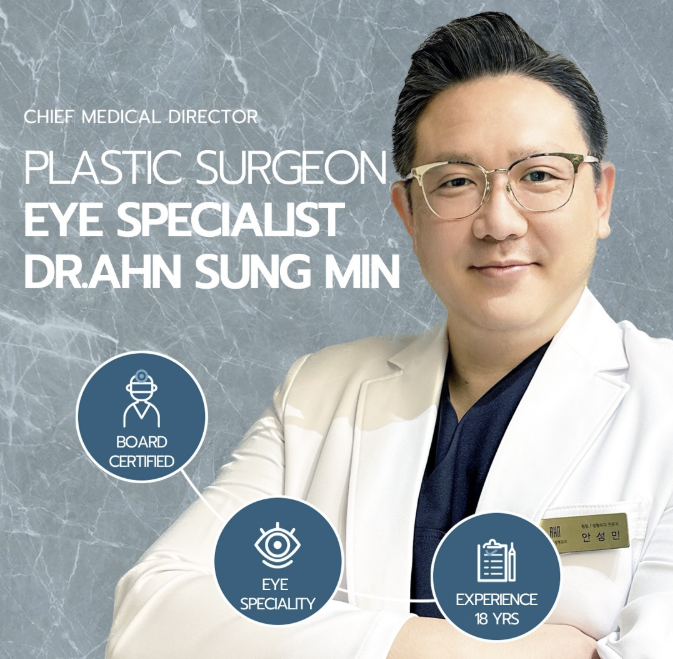
Canthopexy in Korea is a procedure that reinforces and supports the outer corner of the eye without significantly changing its natural position. At Ahn Sung Min Plastic Surgery Clinic, Dr. Ahn Sung Min customizes canthopexy to improve lower eyelid support, eye stability, and overall eye shape. The goal is to achieve subtle, natural-looking enhancement while preserving healthy eyelid function.
Canthopexy Korea
Canthopexy is a specialized eye procedure that tightens and reinforces the lateral canthal tendon to provide additional support for the lower eyelid.
Unlike lateral canthoplasty, canthopexy primarily focuses on improving eyelid stability rather than significantly lengthening or reshaping the eye.
Personalized Consultation by Dr. Ahn Sung Min
Every patient undergoes a comprehensive eye evaluation.
The consultation includes:
- Lower eyelid support assessment
- Eye shape analysis
- Lateral canthal tendon evaluation
- Eye symmetry
- Lower eyelid position
- Facial proportions
- Previous eye surgeries
- Skin elasticity
- Personal aesthetic goals
Every treatment plan is individually customized.
Who Is a Good Candidate?
Canthopexy may be recommended for patients with:
- Mild lower eyelid laxity
- Weak lower eyelid support
- Round-looking eyes
- Mild lower eyelid drooping
- Desire for subtle eye refinement
- Combination eye surgery candidates
- Early eyelid aging
- Realistic expectations
A detailed consultation determines whether canthopexy or canthoplasty is more appropriate.
How Canthopexy Is Performed
Depending on the patient's anatomy, Dr. Ahn Sung Min may perform:
- Lateral canthal tendon tightening
- Lower eyelid support reinforcement
- Outer corner stabilization
- Lower eyelid repositioning
- Double eyelid surgery if indicated
- Lower blepharoplasty when appropriate
- Combination eyelid procedures
The procedure is designed to preserve the natural anatomy while improving eyelid stability.
Benefits of Canthopexy
Canthopexy may help:
- Strengthen lower eyelid support
- Improve eye stability
- Reduce mild lower eyelid sagging
- Enhance eye symmetry
- Create a more refreshed appearance
- Support lower eyelid surgery
- Preserve natural eye shape
- Achieve subtle, long-lasting results
The goal is functional support with natural aesthetic improvement.
Recovery After Surgery
Recovery is generally mild.
Most swelling and bruising improve within one to two weeks, while the tissues continue to stabilize over the following months.
Careful postoperative care helps ensure proper healing and long-term support.
International Patients
International patients may request an online consultation before traveling to Korea.
Recommended photographs include:
- Front view
- Side view
- Eyes open
- Eyes closed
- Looking upward
- Looking straight ahead
Patients should also provide:
- Medical history
- Previous eye surgeries
- Current medications
- Desired eye appearance
- Reference photographs if available
The final treatment plan is confirmed during the in-person consultation.
Why Choose Ahn Sung Min Plastic Surgery Clinic?
Successful canthopexy requires an understanding of both eyelid function and facial aesthetics.
The clinic offers:
- Customized canthopexy
- Advanced lower eyelid support techniques
- Personalized eye analysis
- Functional and aesthetic preservation
- Combination eyelid surgery expertise
- Natural-looking outcomes
- Long-lasting eyelid stability
- International patient care
Frequently Asked Questions
What is canthopexy?
Canthopexy is a procedure that tightens and reinforces the outer corner of the eye to improve lower eyelid support without significantly changing eye shape.
What is the difference between canthopexy and canthoplasty?
Canthopexy strengthens and supports the existing lateral canthal tendon, while canthoplasty involves releasing and repositioning the outer corner to change eye shape or length.
Can canthopexy make my eyes look bigger?
Canthopexy is not primarily designed to enlarge the eyes. Its main purpose is to improve eyelid support and create a more youthful, stable appearance.
Is canthopexy commonly combined with other eye surgeries?
Yes. It is often combined with lower blepharoplasty, double eyelid surgery, ptosis correction, or lower canthoplasty.
Can canthopexy improve lower eyelid drooping?
Yes. It can improve mild lower eyelid laxity and provide additional support, depending on the patient's anatomy.
Will my eye shape change after canthopexy?
Only subtle changes are expected. The procedure is designed to preserve your natural eye shape while improving eyelid stability.
Is canthopexy better than canthoplasty?
Neither procedure is universally better. The most appropriate option depends on your anatomy, eyelid support, and aesthetic goals.
Will there be visible scars?
Incisions are carefully placed around the outer corner of the eye, and scars generally become less noticeable as healing progresses.
How long is recovery?
Most swelling and bruising improve within one to two weeks, while the eyelids continue to strengthen and settle over several months.
Can international patients receive an online consultation?
Yes. International patients can submit photographs and medical information for a preliminary evaluation before visiting Korea.
How long should international patients stay in Korea?
The recommended stay depends on whether canthopexy is performed alone or combined with other eyelid procedures.
Can canthopexy be performed as revision surgery?
Yes. In selected cases, canthopexy may be used during revision surgery to improve eyelid support and stability after previous eye procedures.