Congenital Ptosis Surgery in Korea |
Pediatric & Adult Ptosis Correction by Dr. Ahn Sung Min
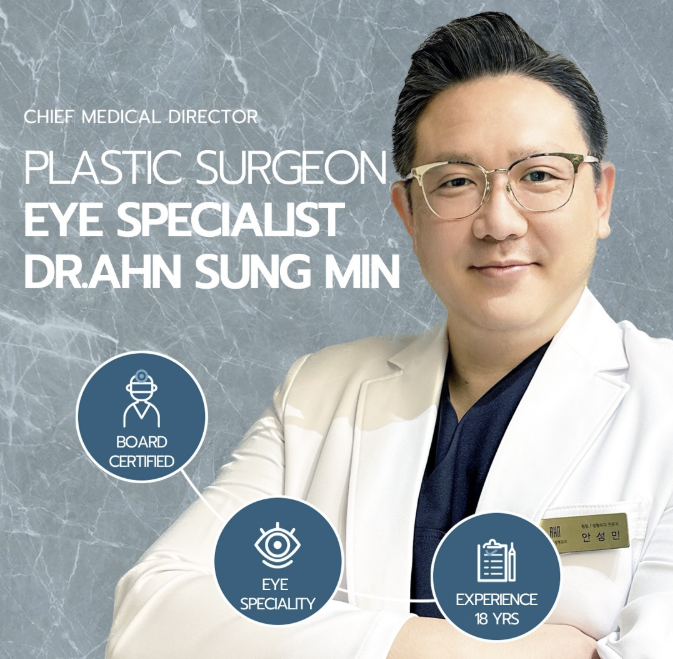
Congenital ptosis surgery in Korea corrects droopy eyelids present from birth due to underdeveloped eyelid-opening muscles. At Ahn Sung Min Plastic Surgery Clinic, Dr. Ahn Sung Min performs customized ptosis correction based on muscle function, eyelid anatomy, age, and the severity of the condition. The goal is to improve eyelid function, protect vision,
and achieve a natural, symmetrical appearance.
Congenital Ptosis Surgery in Korea
Congenital ptosis is a condition in which one or both upper eyelids droop from birth because the levator muscle responsible for lifting the eyelid has not developed normally.
The severity varies from mild drooping to cases where the eyelid partially covers the pupil and interferes with vision.
Comprehensive Evaluation by Dr. Ahn Sung Min
Every patient undergoes a detailed functional examination before surgery.
The assessment includes:
- Levator muscle function
- Severity of eyelid drooping
- Eyelid-opening strength
- Visual obstruction
- Eye symmetry
- Brow compensation
- Head posture
- Corneal health
- Overall facial development
The treatment plan is individualized according to the patient's age, functional needs, and eyelid anatomy.
Signs of Congenital Ptosis
Patients with congenital ptosis may experience:
- Droopy upper eyelid since birth
- One eyelid lower than the other
- Small-looking eye
- Constant eyebrow lifting
- Chin-up head posture
- Difficulty fully opening the eye
- Uneven eyelid creases
- Visual obstruction in severe cases
Early evaluation is important, especially when vision development may be affected.
How Congenital Ptosis Surgery Is Performed
Congenital ptosis surgery aims to improve eyelid-opening function by correcting the weakened eyelid-lifting mechanism.
The surgical technique depends primarily on the strength of the levator muscle. Patients with better muscle function may undergo levator advancement or strengthening procedures, while those with poor muscle function may require more advanced reconstructive techniques.
The appropriate approach is determined after a comprehensive examination.
Congenital Ptosis Surgery with Double Eyelid Surgery
In selected patients, congenital ptosis correction may be combined with double eyelid surgery.
Creating a natural eyelid crease can improve eyelid symmetry and overall appearance while preserving proper eyelid function.
The decision depends on the patient's anatomy, age, and surgical goals.
Benefits of Congenital Ptosis Surgery
Congenital ptosis correction may help:
- Improve eyelid-opening function
- Reduce visual obstruction
- Promote symmetrical eye appearance
- Improve facial balance
- Reduce forehead muscle strain
- Correct abnormal head posture
- Improve confidence and appearance
The primary goal is functional improvement while achieving natural cosmetic results.
Who Is a Good Candidate?
Congenital ptosis surgery may be appropriate for:
- Children born with droopy eyelids
- Adults with untreated congenital ptosis
- Patients with one-sided or both-sided congenital ptosis
- Patients with reduced vision caused by eyelid drooping
- Patients with significant eyelid asymmetry
- Individuals experiencing forehead strain or chin-up posture
A detailed examination is necessary to determine the most appropriate timing and surgical technique.
Revision Congenital Ptosis Surgery
Revision surgery may be considered when previous correction has resulted in:
- Residual drooping
- Recurrent ptosis
- Eyelid asymmetry
- Under-correction
- Over-correction
- Unsatisfactory eyelid height
Revision procedures require careful planning because of scar tissue and previous surgical changes.
Recovery After Congenital Ptosis Surgery
Recovery depends on the patient's age and the surgical technique performed.
Swelling and bruising are expected during the first one to two weeks. Eyelid position gradually stabilizes over several months as healing progresses.
Regular follow-up appointments are important to monitor eyelid function and healing.
International Patients
International patients may request a preliminary online consultation before traveling to Korea.
Recommended photographs include:
- Eyes open naturally
- Eyes gently closed
- Looking upward
- Looking straight ahead
- Front view
- Side or three-quarter view
Parents of pediatric patients should also provide birth history, previous eye examinations, and any prior treatments or surgeries.
The final diagnosis and treatment plan are confirmed during the in-person consultation.
Why Choose Ahn Sung Min Plastic Surgery Clinic?
Ahn Sung Min Plastic Surgery Clinic specializes in customized eyelid surgery for both functional and aesthetic concerns.
The clinic emphasizes:
- Specialized ptosis surgery
- Congenital ptosis expertise
- Comprehensive functional evaluation
- Personalized surgical planning
- Natural-looking eyelid correction
- Primary and revision ptosis surgery
- Careful symmetry assessment
- International patient support
Frequently Asked Questions
What is congenital ptosis?
Congenital ptosis is drooping of the upper eyelid that is present at birth because the eyelid-lifting muscle did not develop normally.
What causes congenital ptosis?
Most cases occur because the levator muscle responsible for lifting the eyelid is underdeveloped before birth.
Can congenital ptosis affect vision?
Yes. In moderate to severe cases, the drooping eyelid may block vision and affect normal visual development if left untreated.
Is congenital ptosis surgery only for children?
No. Although many patients are treated during childhood, adults with untreated congenital ptosis can also benefit from surgery.
How is congenital ptosis surgery different from age-related ptosis surgery?
Congenital ptosis is usually caused by abnormal muscle development from birth, while age-related ptosis develops later as the eyelid muscles stretch or weaken over time.
Which surgical technique is used?
The surgical method depends primarily on levator muscle function and the severity of the ptosis. The technique is individualized for each patient.
Can congenital ptosis surgery be combined with double eyelid surgery?
Yes. In selected patients, both procedures may be performed together to improve eyelid function and symmetry.
Will both eyes look symmetrical after surgery?
The goal is to achieve the best possible symmetry, although perfect symmetry cannot always be guaranteed because natural facial differences exist.
Can congenital ptosis return after surgery?
Most results are long-lasting, although additional treatment may occasionally be necessary depending on growth, healing, and muscle function.
How long does recovery take?
Most swelling improves within one to two weeks, while the eyelid position and symmetry continue to refine over several months.
How long should international patients stay in Korea?
The recommended stay depends on the patient's age, surgical technique, and postoperative follow-up schedule.
Is an online consultation available?
Yes. International patients may submit photographs, medical history, previous eye evaluations, and their concerns for a preliminary assessment before traveling to Korea.