Severe Ptosis Surgery in Korea |
Advanced Ptosis Correction by Dr. Ahn Sung Min
Severe ptosis surgery in Korea corrects significant eyelid drooping caused by advanced weakness of the eyelid-opening muscles.
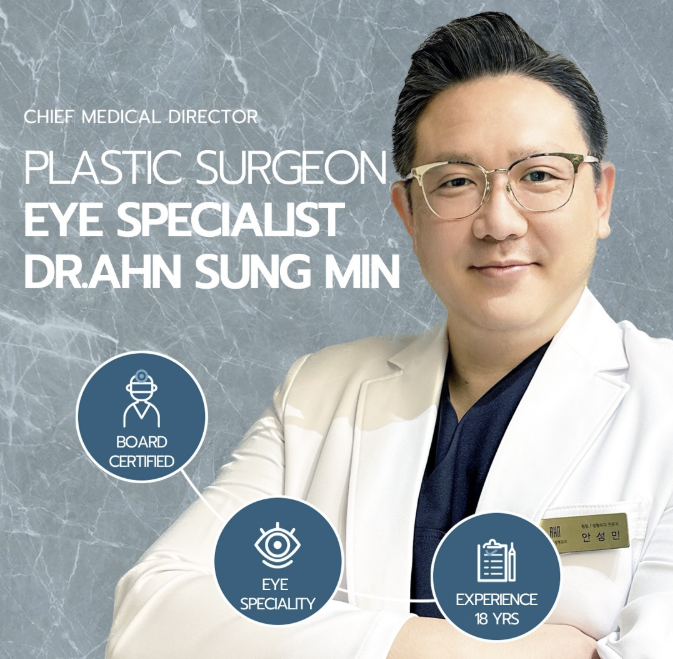
At Ahn Sung Min Plastic Surgery Clinic, Dr. Ahn Sung Min performs individualized ptosis correction based on muscle function,
eyelid anatomy, and severity of the condition. The goal is to restore comfortable eyelid opening while achieving a balanced
and natural appearance.
Severe Ptosis Surgery in Korea
Severe ptosis surgery is performed for patients whose upper eyelids droop enough to interfere with normal eye opening or partially block vision.
Compared with mild ptosis, severe ptosis requires more advanced surgical planning because the eyelid muscles often have significantly reduced lifting strength.
Comprehensive Evaluation by Dr. Ahn Sung Min
Dr. Ahn Sung Min carefully evaluates eyelid function before determining the most appropriate surgical technique.
The examination includes:
- Severity of ptosis
- Levator muscle function
- Eyelid-opening strength
- Upper visual field
- Brow compensation
- Eye symmetry
- Upper eyelid skin
- Previous eyelid surgery
- Overall facial balance
Every surgical plan is customized according to the patient's functional needs and aesthetic goals.
Signs of Severe Ptosis
Patients with severe ptosis may experience:
- Markedly droopy upper eyelids
- Difficulty keeping the eyes open
- Obstructed upper vision
- Constant eyebrow lifting
- Deep forehead wrinkles
- Tired or sleepy-looking eyes
- Significant eyelid asymmetry
- Frequent head tilting to improve vision
These symptoms may occur because of congenital conditions, aging, nerve disorders, trauma, or previous eyelid surgery.
How Severe Ptosis Surgery Is Performed
Severe ptosis surgery strengthens or reconstructs the eyelid-opening mechanism to improve eyelid elevation.
Depending on the degree of muscle weakness, different surgical techniques may be recommended. In patients with very poor levator muscle function, specialized procedures may be necessary to achieve the safest and most effective result.
The appropriate surgical approach is determined after a detailed functional examination.
Severe Ptosis Surgery with Double Eyelid Surgery
Many patients choose to combine severe ptosis correction with double eyelid surgery.
After restoring eyelid function, a natural eyelid crease can be created to improve eye symmetry and overall facial harmony. The crease is carefully designed to avoid an overly large or unnatural appearance.
Benefits of Severe Ptosis Surgery
Severe ptosis surgery may help:
- Improve eyelid-opening function
- Expand the upper visual field
- Reduce forehead muscle strain
- Improve eye symmetry
- Brighten tired-looking eyes
- Restore a more alert appearance
- Improve overall facial balance
The focus is on restoring function while maintaining natural aesthetics.
Who Is a Good Candidate?
Severe ptosis surgery may be appropriate for patients with:
- Significant upper eyelid drooping
- Poor eyelid-opening strength
- Vision affected by drooping eyelids
- Congenital severe ptosis
- Advanced age-related ptosis
- Previous unsuccessful ptosis surgery
- Severe eyelid asymmetry
- Chronic forehead strain from eyebrow lifting
A detailed consultation is required to determine the most appropriate treatment.
Revision Severe Ptosis Surgery
Revision surgery may be recommended for patients who have:
- Persistent severe drooping
- Under-correction
- Over-correction
- Recurrent ptosis
- Significant asymmetry
- Unsatisfactory previous surgery
Revision cases are often more complex because of scar tissue and previous changes to the eyelid muscles.
Recovery After Severe Ptosis Surgery
Recovery following severe ptosis surgery may take longer than recovery after mild ptosis correction.
Swelling and bruising are common during the first one to two weeks, while eyelid height and symmetry continue to improve over the following months as healing progresses.
Regular follow-up appointments are important to monitor recovery and eyelid function.
International Patients
International patients may submit photographs before traveling to Korea.
Recommended photographs include:
- Eyes open naturally
- Eyes gently closed
- Looking upward
- Looking straight ahead
- Front view
- Side or three-quarter view
Patients should also provide previous eyelid surgery history, medical conditions, medications, and any visual symptoms.
The final diagnosis and treatment plan are confirmed during the in-person consultation.
Why Choose Ahn Sung Min Plastic Surgery Clinic?
Ahn Sung Min Plastic Surgery Clinic provides advanced ptosis surgery with a focus on restoring both eyelid function and natural appearance.
The clinic emphasizes:
- Specialized eyelid surgery
- Advanced severe ptosis correction
- Comprehensive functional evaluation
- Customized surgical planning
- Natural-looking results
- Primary and revision ptosis surgery
- Careful symmetry assessment
- International patient support
Frequently Asked Questions
What is severe ptosis?
Severe ptosis is a condition in which the upper eyelids droop significantly because the eyelid-opening muscles are very weak, often affecting vision and daily activities.
How is severe ptosis different from mild ptosis?
Severe ptosis causes much greater eyelid drooping and often interferes with vision. It usually requires more advanced surgical correction than mild ptosis.
What causes severe ptosis?
Severe ptosis may result from congenital muscle weakness, aging, nerve disorders, trauma, previous eyelid surgery, or other medical conditions affecting eyelid function.
Can severe ptosis affect vision?
Yes. Significant drooping of the upper eyelids may partially block the upper visual field and make daily activities more difficult.
How is severe ptosis treated?
Treatment typically involves surgery to strengthen or reconstruct the eyelid-opening mechanism. The exact technique depends on the patient's muscle function and eyelid anatomy.
Can severe ptosis surgery be combined with double eyelid surgery?
Yes. Many patients undergo both procedures together to improve eyelid function, eye symmetry, and overall appearance.
Will my eyes look natural after surgery?
The goal is to restore normal eyelid height while maintaining natural facial expressions and avoiding an overcorrected appearance.
Is severe ptosis surgery more complicated?
Yes. Severe ptosis often requires more advanced surgical planning because the eyelid muscles may have limited lifting ability.
Can previous severe ptosis surgery be revised?
Yes. Revision surgery may improve recurrent drooping, under-correction, asymmetry, or unsatisfactory results from previous procedures.
How long does recovery take?
Most swelling improves within one to two weeks, but final eyelid height, function, and symmetry continue to refine over several months.
How long should international patients stay in Korea?
The recommended stay depends on the surgical technique, recovery progress, and postoperative follow-up schedule.
Is an online consultation available?
Yes. International patients may submit photographs, medical history, previous eyelid surgery details, and their concerns for a preliminary evaluation before traveling to Korea.