How Long to Stay in Korea for Eye Surgery |
Recovery Timeline by Dr. Ahn Sung Min
The ideal length of stay in Korea depends on the type of eye surgery and individual healing progress. Dr. Ahn Sung Min provides personalized recommendations to ensure international patients have enough time for consultation, surgery, follow-up care, and safe recovery before returning home.
How Long to Stay in Korea for Eye Surgery
One of the most common questions international patients ask is, "How long should I stay in Korea for eye surgery?"
The answer depends on the procedure performed, your recovery progress, and whether you are having primary or revision surgery. At Ahn Sung Min Plastic Surgery Clinic, every patient receives a personalized treatment and recovery schedule to ensure sufficient time for follow-up care before returning home.
Why Staying Long Enough Matters
Although many eye procedures involve relatively short recovery periods, early follow-up care is an important part of achieving the best possible outcome.
Remaining in Korea allows Dr. Ahn Sung Min to:
- Monitor healing
- Check incision sites
- Assess swelling
- Remove sutures when necessary
- Answer recovery questions
- Detect potential concerns early
- Confirm that recovery is progressing normally
Patients should avoid scheduling their return flight too soon after surgery.
Typical Treatment Schedule
A typical visit may include:
Day 1
- In-person consultation
- Comprehensive eye examination
- Surgical planning
- Final procedure confirmation
Day 2
- Surgery
- Recovery monitoring
- Postoperative instructions
Following Days
- Follow-up examinations
- Swelling assessment
- Recovery guidance
- Medication review
Before Departure
- Final examination
- Suture removal if required
- Travel clearance
- Long-term recovery instructions
The exact schedule varies depending on the procedure and individual healing.
Recommended Stay by Procedure
The recommended stay may differ according to the type of surgery.
Generally:
- Non-incisional double eyelid surgery may require a shorter stay.
- Incisional double eyelid surgery often requires additional follow-up.
- Ptosis correction may require closer monitoring.
- Lower blepharoplasty may require additional recovery observation.
- Combined procedures usually require a longer stay.
- Revision eye surgery often requires the longest follow-up because healing can be less predictable.
Your personalized recommendation is provided during the consultation.
If You Are Having Revision Surgery
Revision eye surgery often requires more detailed planning and careful postoperative observation.
Patients undergoing revision procedures may need additional time for:
- Swelling evaluation
- Scar assessment
- Incision monitoring
- Eyelid function checks
- Multiple follow-up visits
- Recovery guidance
Remaining in Korea longer allows the surgeon to monitor early healing more closely.
Before Flying Home
Before international travel, the clinic evaluates:
- Incision healing
- Swelling level
- Bruising
- Eyelid function
- Eye symmetry
- General recovery
- Overall fitness for travel
Patients receive personalized instructions for continuing recovery after returning home.
Planning Your Trip
When arranging your travel, consider allowing enough time for:
- Consultation
- Surgery
- Rest
- Follow-up appointments
- Suture removal when required
- Unexpected schedule adjustments
- Comfortable recovery before a long flight
Avoid booking a return flight immediately after surgery whenever possible.
Can I Explore Seoul During Recovery?
Many patients combine their surgery with a visit to Seoul.
During the early recovery period, light activities may include:
- Visiting cafés
- Gentle walking
- Shopping
- Indoor sightseeing
- Resting at the hotel
- Short local outings
However, patients should avoid:
- Long walking tours
- Hiking
- Swimming
- Saunas
- Heavy lifting
- Intense exercise
- Excessive alcohol
- Dusty outdoor activities
- Direct sun exposure for prolonged periods
Recovery should always take priority over sightseeing.
After Returning Home
Healing continues after leaving Korea.
Patients receive detailed instructions regarding:
- Swelling progression
- Scar care
- Sleeping position
- Makeup
- Contact lenses
- Exercise
- Returning to work
- Long-term healing
- When to contact the clinic
Postoperative communication remains available if questions arise during recovery.
Tips for International Patients
To make your trip smoother:
- Arrive before your consultation.
- Allow flexibility in your travel schedule.
- Bring comfortable clothing.
- Wear sunglasses after surgery.
- Follow all postoperative instructions.
- Attend every follow-up appointment.
- Do not rush your departure.
- Contact the clinic if unusual symptoms develop.
Proper planning helps ensure a safer recovery and a more enjoyable medical tourism experience.
Why Choose Dr. Ahn Sung Min?
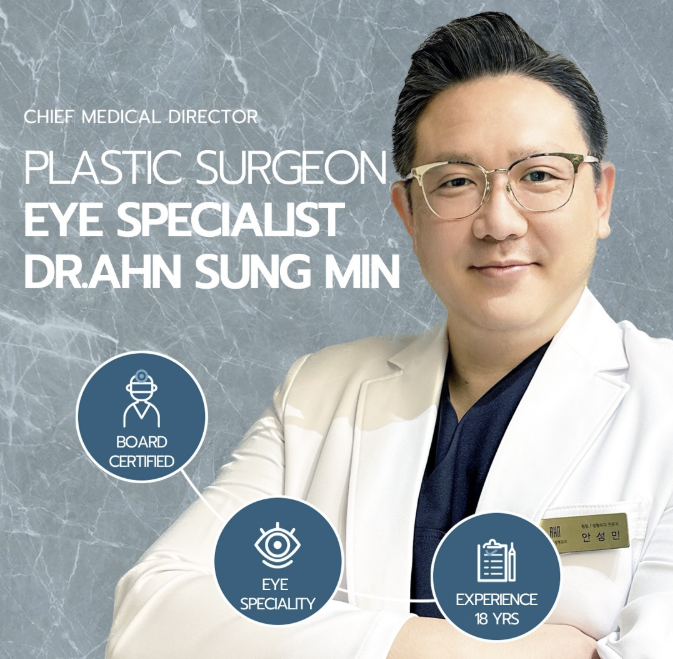
Dr. Ahn Sung Min provides personalized treatment schedules for every international patient based on the planned procedure, expected recovery, and individual healing progress. Careful follow-up and detailed recovery guidance help patients return home with confidence.
The clinic offers:
- Personalized treatment planning
- Specialized eye surgery
- Natural-looking results
- Individual recovery schedules
- Comprehensive follow-up care
- English communication
- International patient coordination
- Long-term postoperative support
Frequently Asked Questions
How long should I stay in Korea for eye surgery?
The recommended stay depends on the procedure performed. Your surgeon will provide a personalized recommendation based on your treatment plan and expected recovery.
Can I fly home immediately after surgery?
It is generally better to remain in Korea long enough for early follow-up care and, when necessary, suture removal before traveling home.
Do all eye surgeries require the same length of stay?
No. Recovery time varies between non-incisional procedures, incisional surgery, ptosis correction, blepharoplasty, combined procedures, and revision surgery.
Why is follow-up important?
Follow-up appointments allow Dr. Ahn Sung Min to monitor healing, evaluate swelling, remove sutures when needed, and address any concerns early.
Does revision surgery require a longer stay?
In many cases, yes. Revision procedures often require closer monitoring because previous surgery may affect healing.
Can I enjoy sightseeing after surgery?
Light sightseeing may be possible, but patients should prioritize rest and avoid strenuous activities during the early recovery period.
When are sutures removed?
The timing depends on the procedure and individual healing progress. Your surgeon will determine the appropriate schedule.
Should I book flexible flights?
Yes. Flexible travel arrangements can be helpful if your recovery requires additional follow-up before returning home.
Can I travel alone?
Many patients do, although having a companion can provide additional comfort and assistance during the first few recovery days.
What happens after I return home?
Patients receive detailed recovery instructions and may contact the clinic with postoperative questions as healing continues.
What should I bring for recovery?
Comfortable clothing, sunglasses, prescribed medications if applicable, and enough time in your travel schedule for proper healing.
Will Dr. Ahn Sung Min provide a personalized recovery timeline?
Yes. Every patient receives an individualized treatment and recovery schedule based on the procedure, healing progress, and travel plans.