Medical Tourism in Korea |
Specialized Eye Surgery by Dr. Ahn Sung Min
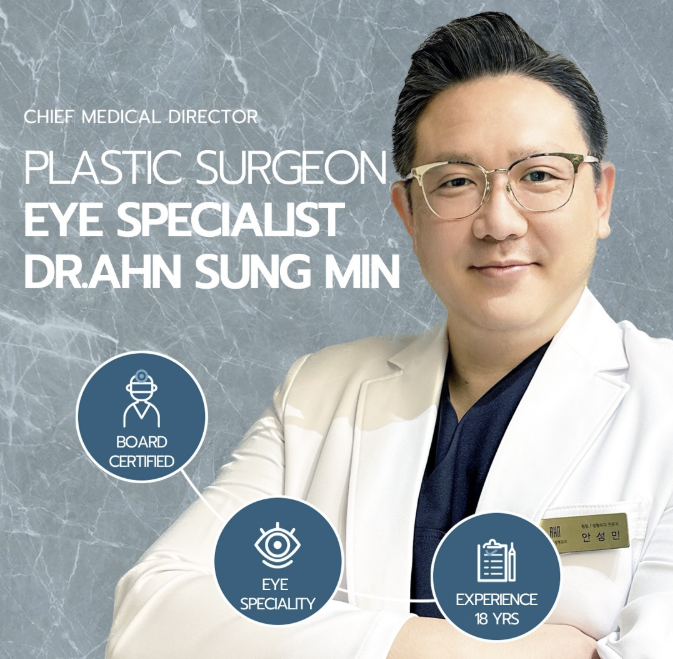
Medical tourism in Korea allows international patients to access specialized eye surgery, personalized treatment planning, and structured postoperative care. Dr. Ahn Sung Min provides natural-looking eyelid surgery with English communication and coordinated support before, during, and after the patient’s visit to Korea.
Medical Tourism in Korea
Korea is a leading destination for international patients seeking advanced plastic surgery and highly personalized medical care. Patients travel to Seoul for specialized surgeons, refined surgical techniques, efficient treatment planning, and comprehensive postoperative support.
At Ahn Sung Min Plastic Surgery Clinic, medical tourism patients receive individualized eye surgery based on their eyelid anatomy, muscle function, facial balance, and desired results.
Why Choose Korea for Eye Surgery?
Korea is internationally recognized for its experience in eyelid and facial aesthetic surgery.
International patients choose Korea for:
- Specialized eye surgeons
- Advanced surgical techniques
- Personalized treatment plans
- Natural-looking results
- Experience with Asian and non-Asian eyelid anatomy
- Access to revision eye surgery
- Efficient consultation and surgery scheduling
- Structured postoperative care
- Competitive treatment costs
- International patient support
The goal is not simply to create larger eyes, but to improve balance, symmetry, function, and harmony with the patient’s face.
Eye Surgery Medical Tourism Services
Dr. Ahn Sung Min provides personalized treatment for:
- Asian double eyelid surgery
- Non-incisional double eyelid surgery
- Incisional double eyelid surgery
- Partial-incision double eyelid surgery
- Ptosis correction
- Upper blepharoplasty
- Lower blepharoplasty
- Under-eye fat repositioning
- Eye bag removal
- Epicanthoplasty
- Canthoplasty
- Canthopexy
- Brow lift
- Revision eye surgery
The recommended procedure is selected after carefully evaluating the patient’s eye shape, skin thickness, fat distribution, muscle strength, eyebrow position, and previous surgical history.
Online Consultation Before Traveling
Patients can begin the medical tourism process before arriving in Korea.
A preliminary online consultation may include:
- Evaluation of front and side-view photographs
- Review of previous surgical history
- Discussion of concerns and desired results
- Initial treatment recommendations
- Estimated surgery cost
- Suggested recovery period
- Recommended length of stay
- Appointment and surgery coordination
The final treatment plan is confirmed after an in-person examination with Dr. Ahn Sung Min.
Personalized Consultation in Korea
During the face-to-face consultation, Dr. Ahn Sung Min evaluates:
- Eyelid structure
- Eyelid muscle function
- Existing crease height and shape
- Skin laxity
- Fat distribution
- Eye symmetry
- Eyebrow position
- Previous scars
- Functional concerns
- Overall facial balance
This detailed evaluation allows the surgery to be designed specifically for the patient rather than following a standardized eyelid shape.
Medical Tourism Treatment Process
A typical eye surgery journey may include:
Before Arrival
Online consultation, preliminary recommendations, pricing guidance, and schedule planning.
Arrival in Korea
Patients attend an in-person consultation and complete any required preoperative examinations.
Surgery
The final design is confirmed before surgery. Postoperative monitoring and medication instructions are provided afterward.
Early Recovery
Patients attend follow-up appointments for incision checks, swelling assessment, and recovery guidance.
Suture Removal
Sutures are removed according to the procedure and healing progress.
Before Departure
The clinic evaluates recovery and provides detailed instructions for continued healing after the patient returns home.
How Long Should Medical Tourists Stay in Korea?
The recommended stay depends on the type and complexity of surgery.
Patients undergoing a simple non-incisional procedure may require less time, while incisional, combined, or revision surgeries may need a longer stay.
The travel schedule should allow enough time for:
- In-person consultation
- Surgery
- Early postoperative recovery
- Follow-up examinations
- Suture removal when required
- Final assessment before flying home
Patients should avoid planning important tourism activities immediately after surgery, as swelling and fatigue are usually more noticeable during the first few days.
Combining Surgery and Tourism
Many patients combine eye surgery with a visit to Seoul. However, recovery should remain the first priority.
During early recovery, suitable activities may include:
- Gentle walking
- Quiet indoor sightseeing
- Visiting nearby cafés
- Light shopping
- Resting at the hotel
- Short trips that do not require strenuous activity
Patients should initially avoid:
- Long walking tours
- Hiking
- Saunas
- Swimming
- Intense exercise
- Heavy luggage
- Dusty outdoor environments
- Excessive sun exposure
- Alcohol consumption
Travel activities should be adjusted according to the patient’s healing progress.
Recovery Support for Overseas Patients
International patients receive detailed guidance regarding:
- Swelling and bruising
- Incision cleaning
- Medication
- Sleeping position
- Cold and warm compresses
- Makeup and skincare
- Contact lenses
- Exercise restrictions
- Returning to work
- Air travel
- Scar management
- Warning signs requiring medical attention
The clinic provides personalized instructions based on the procedure performed.
Medical Tourism for Revision Eye Surgery
Korea is also a popular destination for patients seeking revision surgery after an unsatisfactory eyelid procedure.
Revision surgery may address:
- Uneven eyelid creases
- Creases that are too high or too low
- Multiple eyelid folds
- Unnatural fixation
- Visible scarring
- Persistent asymmetry
- Incomplete ptosis correction
- Recurrent drooping
- Unsatisfactory canthoplasty
- Lower eyelid irregularities
Revision surgery may be more complex because of scar tissue and changes to the original anatomy. An in-person examination is necessary to determine the safest treatment plan.
English Support for Medical Tourists
Clear communication is essential when traveling abroad for surgery.
International patient assistance may include:
- English consultation support
- Appointment coordination
- Surgical plan explanations
- Pricing guidance
- Recovery schedule planning
- Postoperative instructions
- Follow-up communication
- Guidance after returning home
Patients are encouraged to fully understand the procedure, expected recovery, limitations, and possible risks before surgery.
Preparing for Eye Surgery in Korea
Before traveling, patients should prepare:
- A valid passport
- Medical and surgical history
- List of current medications
- Information about allergies
- Previous operation records when available
- Clear photographs for online evaluation
- Comfortable clothing
- Sunglasses
- Enough time for postoperative recovery
Patients should also disclose smoking, medical conditions, previous eye surgery, and medications that may affect bleeding or healing.
After Returning Home
Healing continues for weeks or months after the patient leaves Korea.
Patients receive guidance about:
- Swelling reduction
- Scar maturation
- Makeup and skincare
- Exercise
- Returning to work
- Contact lens use
- Long-term settling of the eyelid crease
- Remote postoperative communication
Patients should contact the clinic immediately if they experience sudden vision changes, severe pain, increasing swelling, persistent bleeding, discharge, fever, or incision separation.
Why Choose Dr. Ahn Sung Min for Medical Tourism in Korea?
Dr. Ahn Sung Min specializes in individualized eye surgery designed around the patient’s eyelid anatomy, facial proportions, and functional needs.
The clinic offers:
- Specialized focus on eye surgery
- Personalized surgical design
- Natural-looking results
- Functional and aesthetic evaluation
- Primary and revision eyelid surgery
- Detailed postoperative care
- English communication
- Coordinated medical tourism support
- Long-term recovery guidance
Frequently Asked Questions
Why is Korea popular for medical tourism?
Korea is known for specialized surgeons, advanced medical technology, personalized treatment, efficient care, and extensive experience in aesthetic surgery.
Can I arrange eye surgery before arriving in Korea?
Yes. Patients may begin with an online consultation, receive preliminary recommendations, and coordinate available consultation and surgery dates.
Is an in-person consultation necessary?
Yes. The final procedure, surgical design, and price are confirmed after Dr. Ahn Sung Min examines the patient in person.
What eye surgeries are available for medical tourists?
Available procedures include double eyelid surgery, ptosis correction, upper and lower blepharoplasty, fat repositioning, canthoplasty, brow lift, and revision surgery.
How long should I stay in Korea?
The recommended stay depends on the procedure. Patients should remain long enough for early recovery, follow-up examinations, and suture removal when required.
Can I enjoy sightseeing after surgery?
Light activities may be possible, but patients should prioritize rest and avoid strenuous tours, heat, dust, swimming, and excessive sun exposure.
Does the clinic provide English support?
Yes. English communication and coordination are available throughout consultation, surgery, recovery, and postoperative follow-up.
Can I receive a surgery price before traveling?
A preliminary estimate may be provided online. The final price is confirmed after the in-person consultation and treatment plan.
Is Korea suitable for revision eye surgery?
Yes. Dr. Ahn Sung Min evaluates patients with asymmetry, scarring, unnatural eyelid creases, incomplete ptosis correction, and other concerns following previous surgery.
When can I fly home after surgery?
The recommended departure date depends on the procedure, incision condition, swelling, and required follow-up schedule.
Can I contact the clinic after returning home?
Yes. International patients can receive continued postoperative guidance while the swelling decreases and the results settle.
What should I prepare before traveling?
Prepare your passport, medical history, medication list, previous surgery information, photographs, recovery time, comfortable clothing, and sunglasses.