Eye Surgery Scar Care Korea | Healing Guide |
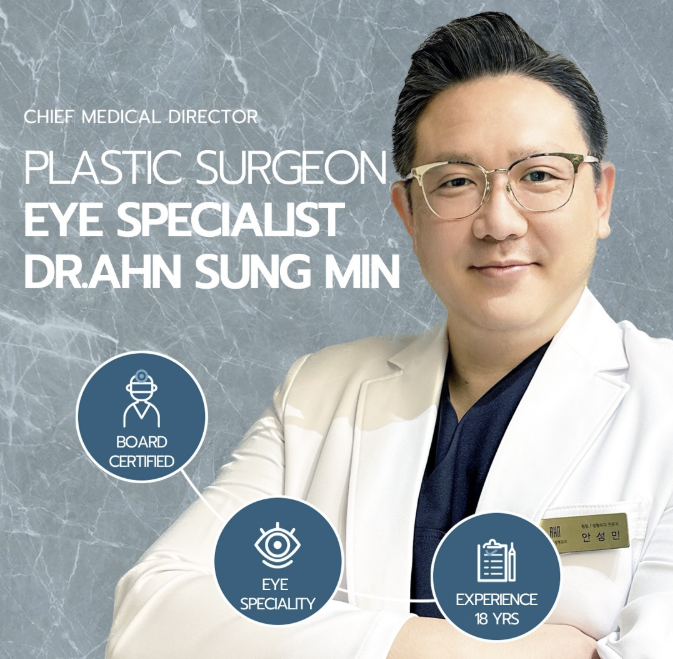
Dr. Ahn Sung Min
Eye surgery scars usually become softer, flatter, and less visible as healing progresses. At Ahn Sung Min Plastic Surgery Clinic, patients receive personalized scar-care guidance to protect the incision, support proper healing, and achieve natural-looking eyelid results.
Eye Surgery Scar Care Korea
Proper scar care is an important part of recovery after eyelid surgery. Incisions are usually placed within natural eyelid folds or along carefully selected lines so that scars become less noticeable over time.
Early scars may appear pink, firm, raised, or slightly uneven. These changes are often temporary and gradually improve as the tissue heals and matures.
Personalized Scar-Care Plan
Dr. Ahn Sung Min provides individualized scar-care instructions based on:
- Type of eye surgery
- Incision location
- Surgical technique
- Skin type and thickness
- Healing progress
- Previous scarring history
- Combined procedures
- Individual recovery response
Scar treatment should only begin when the incision has healed sufficiently and the surgeon confirms that it is safe.
Eye Surgery Scar-Healing Timeline
Although scar healing varies, patients generally experience:
Days 1–7
- Incisions may appear red or slightly raised
- Mild swelling and bruising are common
- The area should be kept clean
- Sutures may be removed if required
Weeks 2–4
- Incision redness gradually decreases
- The scar may feel firm or tight
- Makeup may be permitted after adequate healing
- Scar-care products may begin if approved
Months 1–3
- Scars gradually soften and flatten
- Redness continues to fade
- Eyelid movement becomes more natural
- Incision lines become less noticeable
Months 3–6
- Continued scar maturation
- Improved skin tone and texture
- Most scars become significantly less visible
Months 6–12
- Final scar refinement continues
- Incision lines usually blend more naturally with the surrounding skin
Scar-Care Tips
Patients are typically advised to:
- Keep the incision clean and dry as instructed
- Avoid rubbing, scratching, or picking the scar
- Use prescribed ointments correctly
- Begin silicone products only after approval
- Protect the scar from direct sunlight
- Avoid smoking and excessive alcohol
- Avoid applying unapproved skincare products
- Attend all scheduled follow-up appointments
Consistent aftercare supports smoother healing and helps prevent unnecessary irritation.
Sun Protection for Eyelid Scars
Sun exposure may cause new scars to become darker or remain red for longer. Once the incision has healed, patients may be advised to use:
- Sunglasses
- A wide-brimmed hat
- Surgeon-approved sunscreen
- Physical sun protection during outdoor activities
Patients should avoid applying sunscreen directly to an unhealed incision.
Scar Care After Different Eye Surgeries
Scar location and recovery may differ after:
- Incisional double eyelid surgery
- Ptosis correction
- Upper blepharoplasty
- Lower blepharoplasty
- Epicanthoplasty
- Lateral canthoplasty
- Brow lift
- Revision eye surgery
Non-incisional procedures may leave little or no visible external scarring, while incisional procedures require a longer scar-maturation period.
When Additional Scar Treatment May Be Considered
Most eyelid scars improve naturally. However, additional treatment may be considered for scars that remain raised, red, firm, dark, or uneven.
Depending on the scar, treatment may include:
- Silicone gel or sheets
- Prescription ointments
- Scar injections
- Laser treatment
- Gentle scar massage when approved
- Surgical scar revision in selected cases
Treatment should be recommended only after a proper examination.
When Should I Contact the Clinic?
Patients should contact the clinic if they experience:
- Increasing redness or warmth
- Persistent discharge
- Worsening pain
- Incision separation
- Significant bleeding
- Rapidly raised or thickened scars
- Signs of infection
Early assessment can help prevent delayed healing or more noticeable scarring.
International Patients
International patients are encouraged to complete their early postoperative examinations before returning home.
The clinic provides:
- Incision assessment
- Suture removal when required
- Scar-healing evaluation
- Personalized product guidance
- Long-term aftercare instructions
- Remote recovery guidance after returning home
Why Choose Ahn Sung Min Plastic Surgery Clinic?
Less visible scarring begins with precise incision placement, delicate tissue handling, and careful closure. Dr. Ahn Sung Min combines meticulous surgical techniques with personalized postoperative scar care to support natural-looking eyelids and well-concealed incision lines.
The clinic offers:
- Precise incision placement
- Personalized scar-care plans
- Detailed postoperative instructions
- Regular follow-up examinations
- Advanced eyelid surgery techniques
- Natural-looking outcomes
- International patient support
- Long-term scar management
Frequently Asked Questions
Are scars visible after eye surgery?
Incisional eye surgery leaves a scar, but it is usually positioned within a natural eyelid fold or discreet anatomical line and becomes less noticeable over time.
How long do eyelid scars remain red?
Redness usually improves gradually over several weeks or months. Complete scar maturation may take six to twelve months.
When can I start using scar gel?
Scar gel should only be used after the incision has fully closed and your surgeon confirms that it is safe.
Can I massage an eyelid scar?
Scar massage may be recommended in some cases, but it should not begin without approval because early or aggressive massage can irritate healing tissue.
Can I wear makeup over the scar?
Makeup may usually be worn after the incision has healed sufficiently and your surgeon approves.
Should I protect the scar from sunlight?
Yes. Sun protection can help prevent prolonged redness and dark pigmentation once the incision has healed.
Is itching normal during scar healing?
Mild itching can occur as the incision heals. Patients should avoid scratching or rubbing the area.
Why does my scar feel hard?
New scar tissue may temporarily feel firm or raised. It usually softens gradually during the maturation process.
Will non-incisional double eyelid surgery leave scars?
Non-incisional surgery generally leaves very small puncture marks that usually become difficult to notice after healing.
Can revision eye surgery cause more scarring?
Revision surgery may involve existing scar tissue and can require a longer healing period. Careful surgical planning is important to minimize additional scarring.
When is laser scar treatment considered?
Laser treatment may be considered after sufficient healing if redness, pigmentation, or uneven texture persists.
When will my eye surgery scar look final?
Most scars improve significantly within three to six months, but final maturation and fading may continue for up to one year.