Eye Surgery Swelling Timeline Korea |
Recovery Guide | Dr. Ahn Sung Min
Swelling is a normal part of healing after eye surgery and gradually improves over the first few weeks. At Ahn Sung Min Plastic Surgery Clinic, patients receive personalized aftercare to help minimize swelling and support a smooth recovery with natural-looking results.
Eye Surgery Swelling Timeline Korea
One of the most common questions after eyelid surgery is, "How long will the swelling last?" The answer depends on the type of procedure, individual healing, and postoperative care. While every patient heals differently, swelling follows a fairly predictable pattern.
Understanding the recovery timeline helps patients feel more confident throughout the healing process.
What Affects Swelling?
The amount and duration of swelling may vary depending on:
- Type of eye surgery performed
- Surgical technique
- Individual healing ability
- Skin thickness
- Combined procedures
- Smoking habits
- Sleep position
- Following postoperative instructions
General Swelling Timeline
Days 1–3
- Swelling reaches its peak
- Mild bruising is common
- Eyelids may feel tight
- Cold compresses are usually recommended
Days 4–7
- Swelling begins to decrease
- Bruising gradually fades
- Eyelid shape becomes more defined
- Many patients return to work
Weeks 2–4
- Most visible swelling resolves
- Eyelids appear increasingly natural
- Makeup is often possible after adequate healing
- Friends and colleagues may not notice surgery
Months 1–3
- Minor residual swelling continues to improve
- Eyelid folds soften
- Scar maturation progresses
- Natural eyelid movement improves
Months 3–6
- Final refinement continues
- Residual swelling gradually disappears
- Final results become fully visible
Swelling by Procedure
Recovery may vary depending on the procedure performed:
- Double eyelid surgery
- Ptosis correction
- Lower blepharoplasty
- Fat repositioning
- Canthoplasty
- Canthopexy
- Brow lift
- Revision eye surgery
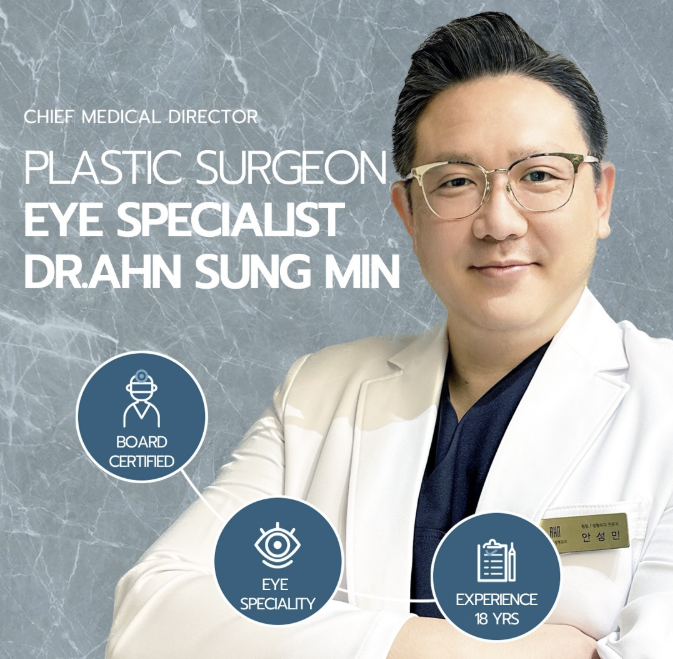
Dr. Ahn Sung Min explains the expected recovery timeline based on your individual surgical plan.
Tips to Reduce Swelling
Patients are typically advised to:
- Sleep with the head elevated
- Apply cold compresses during the first few days
- Avoid rubbing the eyes
- Limit strenuous physical activity
- Avoid smoking and excessive alcohol
- Stay hydrated
- Eat a balanced, low-sodium diet
- Attend all follow-up appointments
Following your surgeon's instructions helps promote faster and more comfortable healing.
When Should I Be Concerned?
Some swelling is expected after surgery. However, patients should contact the clinic promptly if they experience:
- Rapidly increasing swelling
- Severe pain
- Persistent bleeding
- Fever
- Sudden vision changes
- Signs of infection
Regular follow-up appointments allow Dr. Ahn Sung Min to monitor healing and address any concerns early.
International Patients
International patients are encouraged to remain in Korea for scheduled postoperative follow-up appointments before returning home.
The clinic provides:
- Recovery monitoring
- Wound assessment
- Personalized aftercare instructions
- Swelling evaluation
- Guidance for continued recovery after returning home
Why Choose Ahn Sung Min Plastic Surgery Clinic?
Managing postoperative swelling is an important part of achieving excellent surgical outcomes. Dr. Ahn Sung Min provides comprehensive postoperative care and closely monitors each patient's healing to help minimize swelling, support proper recovery, and achieve balanced, natural-looking results.
The clinic offers:
- Personalized recovery plans
- Detailed postoperative instructions
- Regular follow-up visits
- Advanced surgical techniques
- Natural-looking results
- International patient support
- Long-term recovery guidance
- Comprehensive eye surgery care
Frequently Asked Questions
When is swelling the worst after eye surgery?
Swelling usually peaks during the first two to three days after surgery before gradually improving.
How long does noticeable swelling last?
Most visible swelling improves significantly within one to two weeks, although minor swelling can persist for several months.
Does everyone heal at the same rate?
No. Recovery varies depending on the procedure, individual healing response, and how closely postoperative instructions are followed.
Is bruising normal?
Yes. Mild bruising commonly accompanies swelling and usually fades within one to two weeks.
Will one eye swell more than the other?
Yes. Temporary differences between the two eyes are common during healing and usually improve naturally.
Can sleeping position affect swelling?
Yes. Sleeping with your head elevated helps reduce fluid accumulation and may decrease swelling.
Does exercise increase swelling?
Strenuous exercise can temporarily worsen swelling during early recovery, so activity should be resumed gradually with your surgeon's approval.
When can I wear makeup?
Eye makeup is usually permitted once the incision sites have healed adequately and your surgeon approves.
How can I reduce swelling faster?
Following your postoperative instructions, using cold compresses, sleeping with your head elevated, avoiding smoking, staying hydrated, and attending follow-up appointments can all help reduce swelling.
Can international patients travel while still swollen?
Yes. Mild swelling is expected during travel, but patients should complete their recommended follow-up appointments before returning home.
When will my eyelids look completely natural?
Most patients look socially presentable within two to four weeks, while subtle refinement and complete resolution of swelling continue over three to six months.
When should I contact my surgeon?
You should contact your surgeon immediately if swelling suddenly worsens, is accompanied by severe pain, fever, persistent bleeding, or changes in vision.