Lower Blepharoplasty in Korea |
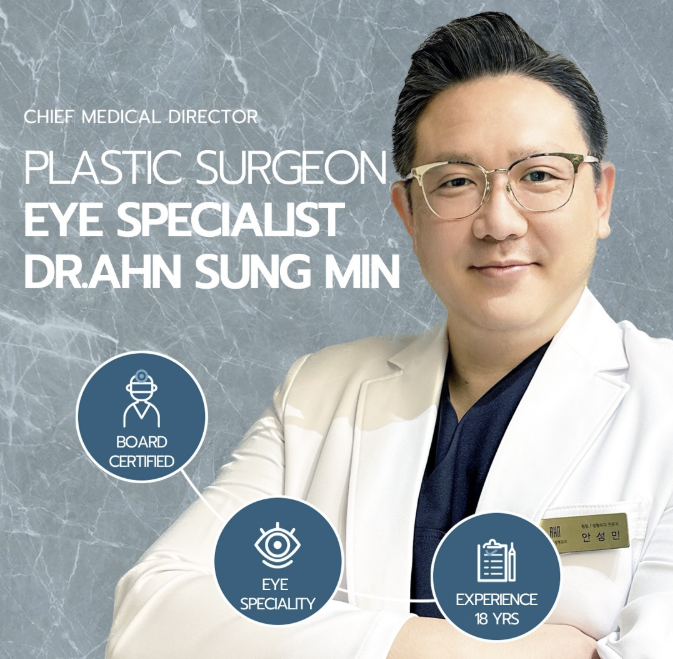
Lower Eyelid Surgery by Dr. Ahn Sung Min
Lower blepharoplasty in Korea improves under-eye bags, excess skin, and puffiness to create a smoother, younger-looking appearance. At Ahn Sung Min Plastic Surgery Clinic, Dr. Ahn Sung Min customizes each lower eyelid surgery based on facial anatomy, skin quality, and fat distribution. The goal is refreshed, natural-looking eyes without an overdone appearance.
Lower Blepharoplasty in Korea
Lower blepharoplasty, also known as lower eyelid surgery, is designed to rejuvenate the area beneath the eyes by addressing under-eye bags, protruding fat, loose skin, and wrinkles.
The procedure restores a smoother transition between the lower eyelid and the cheek while preserving natural facial expressions.
Personalized Evaluation by Dr. Ahn Sung Min
Every patient receives a comprehensive examination before surgery.
The assessment includes:
- Under-eye fat distribution
- Skin elasticity
- Excess skin
- Lower eyelid support
- Tear trough depth
- Eye symmetry
- Facial proportions
- Previous eyelid surgery
- Overall facial aging
The surgical approach is tailored to each patient's anatomy and aesthetic goals.
Common Concerns Treated
Lower blepharoplasty may improve:
- Under-eye bags
- Puffy lower eyelids
- Loose lower eyelid skin
- Fine wrinkles
- Tear trough deformity
- Tired-looking eyes
- Shadowing beneath the eyes
- Age-related lower eyelid changes
How Lower Blepharoplasty Is Performed
Depending on the patient's condition, surgery may involve removing or repositioning under-eye fat, tightening loose skin, and improving lower eyelid support.
Some patients require fat repositioning to smooth the transition between the eyelid and cheek, while others may benefit from skin removal or muscle tightening.
The most appropriate technique is selected during the consultation.
Benefits of Lower Blepharoplasty
Lower eyelid surgery may help:
- Reduce under-eye bags
- Smooth lower eyelid contours
- Improve tear trough appearance
- Tighten loose skin
- Reduce wrinkles
- Create a more youthful appearance
- Refresh tired-looking eyes
- Improve facial harmony
The objective is subtle rejuvenation while maintaining natural facial expressions.
Who Is a Good Candidate?
Lower blepharoplasty may be appropriate for patients with:
- Persistent under-eye bags
- Puffy lower eyelids
- Loose lower eyelid skin
- Tear troughs
- Age-related lower eyelid aging
- Good overall health
- Realistic expectations
- Desire for long-lasting eye rejuvenation
A detailed consultation is necessary to determine the best surgical approach.
Revision Lower Blepharoplasty
Revision surgery may be recommended for patients with:
- Residual under-eye bags
- Persistent puffiness
- Asymmetry
- Excess skin remaining
- Irregular contours
- Unsatisfactory previous lower eyelid surgery
Revision procedures require careful evaluation because of scar tissue and altered anatomy.
Recovery After Lower Blepharoplasty
Most swelling and bruising improve within one to two weeks.
As healing progresses, the lower eyelids gradually soften, and the final contour becomes more natural over the following months.
Patients should attend scheduled follow-up visits to monitor recovery.
International Patients
International patients may request an online consultation before visiting Korea.
Recommended photographs include:
- Front view
- Side view
- Looking upward
- Looking straight ahead
- Smiling
- Neutral facial expression
Patients should also provide previous eyelid surgery history, medical conditions, and current medications.
The final surgical plan is confirmed during the in-person consultation.
Why Choose Ahn Sung Min Plastic Surgery Clinic?
Ahn Sung Min Plastic Surgery Clinic specializes in natural-looking eyelid rejuvenation with customized surgical planning.
The clinic emphasizes:
- Specialized eyelid surgery
- Customized lower blepharoplasty
- Fat repositioning techniques
- Natural-looking rejuvenation
- Personalized surgical planning
- Primary and revision eyelid surgery
- Careful symmetry assessment
- International patient support
Frequently Asked Questions
What is lower blepharoplasty?
Lower blepharoplasty is surgery that improves under-eye bags, loose skin, and puffiness to create a smoother and younger-looking lower eyelid.
What causes under-eye bags?
Under-eye bags commonly develop because of aging, weakening of the supporting tissues, protruding fat, genetics, and skin laxity.
Will lower blepharoplasty remove dark circles?
The procedure improves shadows caused by under-eye bags and tear troughs, but pigmentation-related dark circles may require additional treatments.
Is fat removed or repositioned?
Depending on the patient's anatomy, fat may be removed, repositioned, or preserved to create the most natural contour.
Will visible scars remain?
Incisions are typically placed just below the eyelashes or inside the lower eyelid, making scars generally very discreet after healing.
Can lower blepharoplasty be combined with other procedures?
Yes. It is commonly combined with upper blepharoplasty, ptosis correction, fat grafting, or facelift surgery for comprehensive facial rejuvenation.
Will my eyes look natural?
Yes. The goal is to refresh the under-eye area without creating a hollow or overcorrected appearance.
How long do results last?
Results are generally long-lasting, although the natural aging process continues over time.
How long does recovery take?
Most swelling and bruising improve within one to two weeks, while final results continue to refine over several months.
Can previous lower eyelid surgery be revised?
Yes. Revision lower blepharoplasty may improve asymmetry, persistent bags, contour irregularities, or unsatisfactory previous results.
How long should international patients stay in Korea?
The recommended stay depends on the surgical technique and postoperative follow-up schedule.
Is an online consultation available?
Yes. International patients may submit photographs, previous surgical history, and their concerns for a preliminary assessment before traveling to Korea.